
What’s Driving Mortgage Rates?
Understanding the Link Between Treasury Yields and Mortgage Rates

Why Do Mortgage Rates Stay High When the Fed Cuts Rates?
Something we often hear from clients: “The Fed has been cutting interest rates, but mortgage rates have remained elevated, why is that?” In an effort to educate all of our clients, we put together some commentary to explain what drives mortgage rates.
The first important aspect to understand is that mortgage rates, specifically 30-year mortgage rates, do not follow the Fed Fund Rates so what the Fed does is not directionally where mortgage rates will go. How is the 30- year mortgage rate calculated? The 30-year fixed mortgage rate is highly correlated with the 10-year US Treasury yield, but it’s not a direct sum. Instead, it reflects the 10-year Treasury yield plus a mortgage spread, which fluctuates based on market conditions.
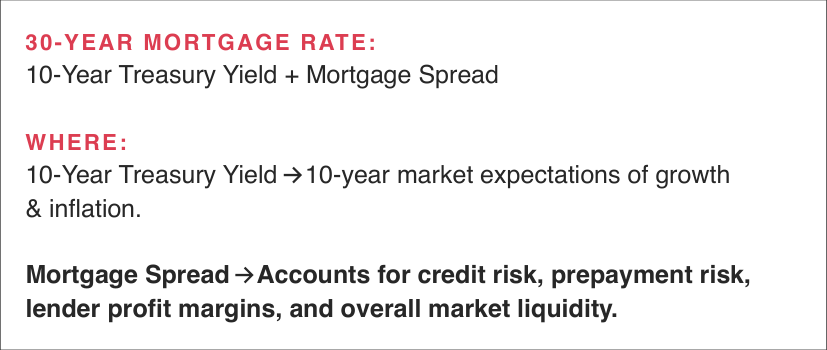
30-YEAR MORTGAGE RATE: 10-Year Treasury Yield + Mortgage Spread WHERE: 10-Year Treasury Yi
The Formula Behind 30-Year Mortgage Rates: Breaking Down the Key Components
Historically, the spread between 30-year mortgage rates and 10-year Treasury yields has averaged 1.5% - 2.0%. However, spreads can widen or tighten based on market conditions. Today (February 2025) mortgage spreads are very high at 2.50%. So current 30-Year Mortgage Rate = 4.20% (10-Year Treasury) + 2.50% (Mortgage Spread) = ~6.70% mortgages rate (depending on credit rating etc.).
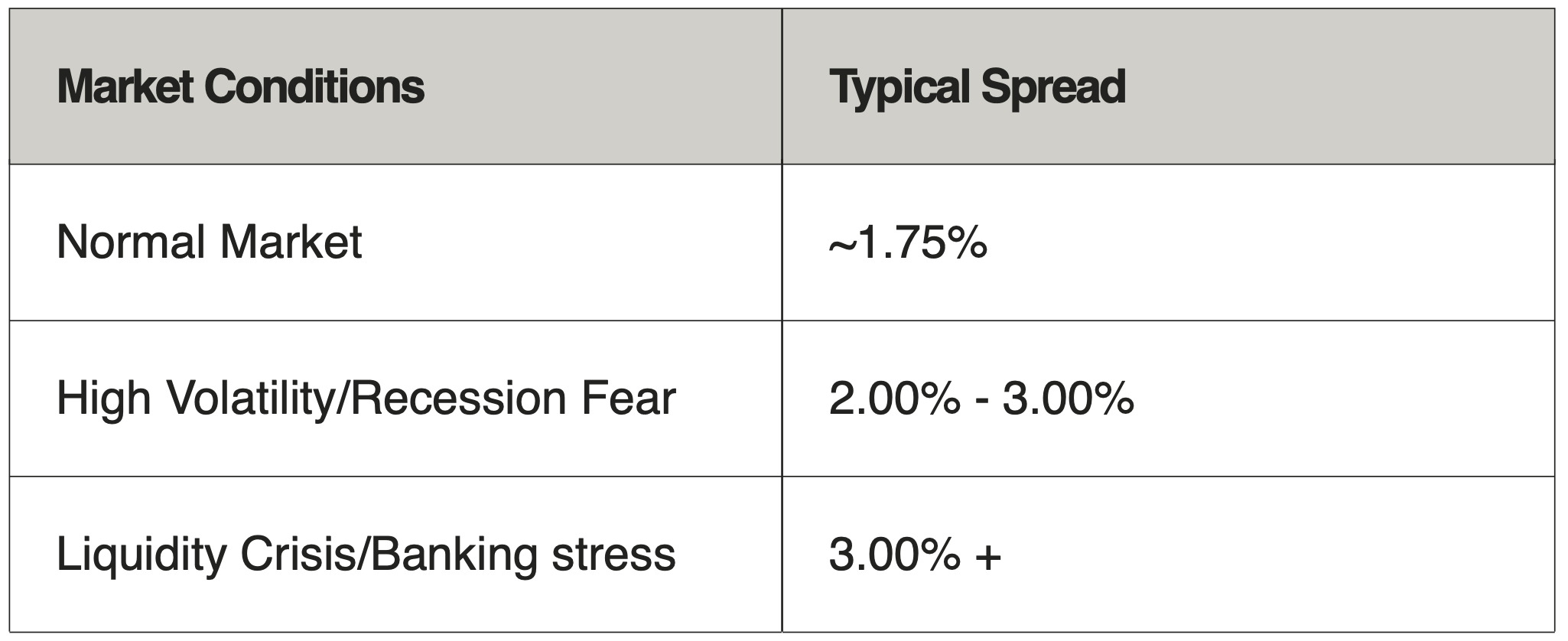
How Market Conditions Impact Mortgage Spreads
Why the 10-Year Treasury Yield Matters for Mortgage Rates
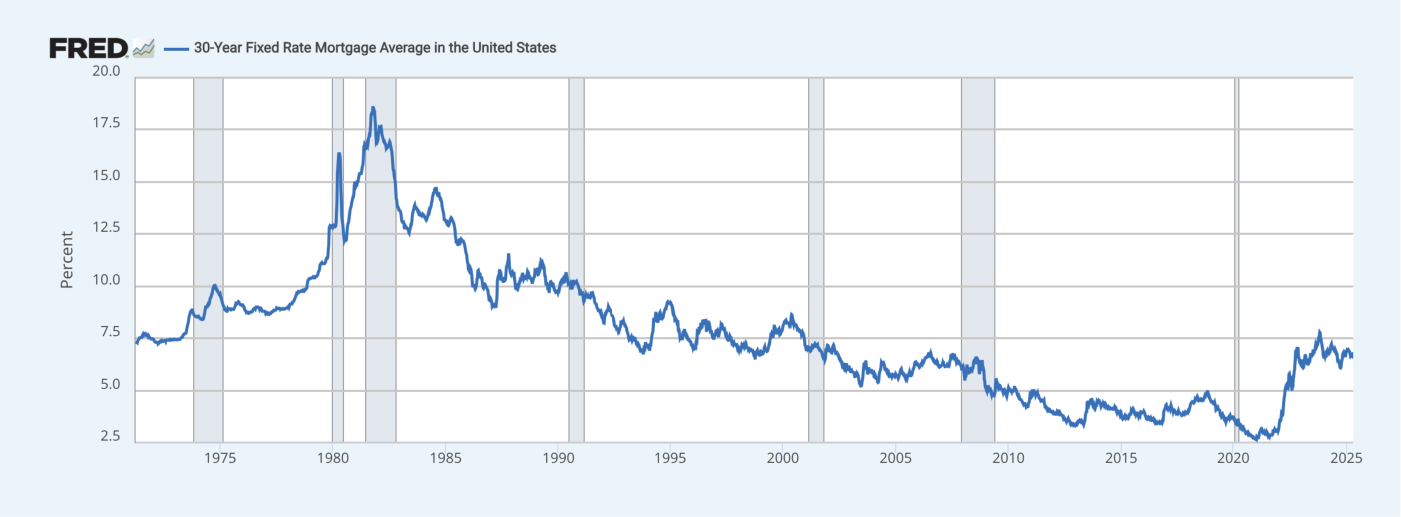
So really, we should care about where the 10-year Treasury yield is headed. As mentioned above the 10-year Treasury yield = 10-year real growth expectations + 10-year inflation expectations. Our view is that (outside of a recession) inflation will continue to run above the Fed’s 2% target and the long run growth will revert back to the historical average ~2%. That leads to a 10-year treasury yield in a range of ~ 3.75% - 4.5%. Yields can overshoot to the upside on lofty growth expectations (like we just saw with the 2024 election) or supply increases and can under shoot to the downside on growth scares/slowdowns. We appear to be in the midst of a growth scare right now (tariffs, DOGE cuts, reorganization of government fiscal priorities) and that is why we have seen the 10-year Treasury yield move from 4.8% to 4.2% in the past couple months (hence why mortgage rates have trended downward).
The Bottom Line
Mortgage rates are most likely not heading back to the pre-covid levels unless we head into a recession or there is major intervention by our government to infl uence the rate down.
