
Inflation
Exploring Higher Inflation Rates in the US (vs. the Rest-of-World)
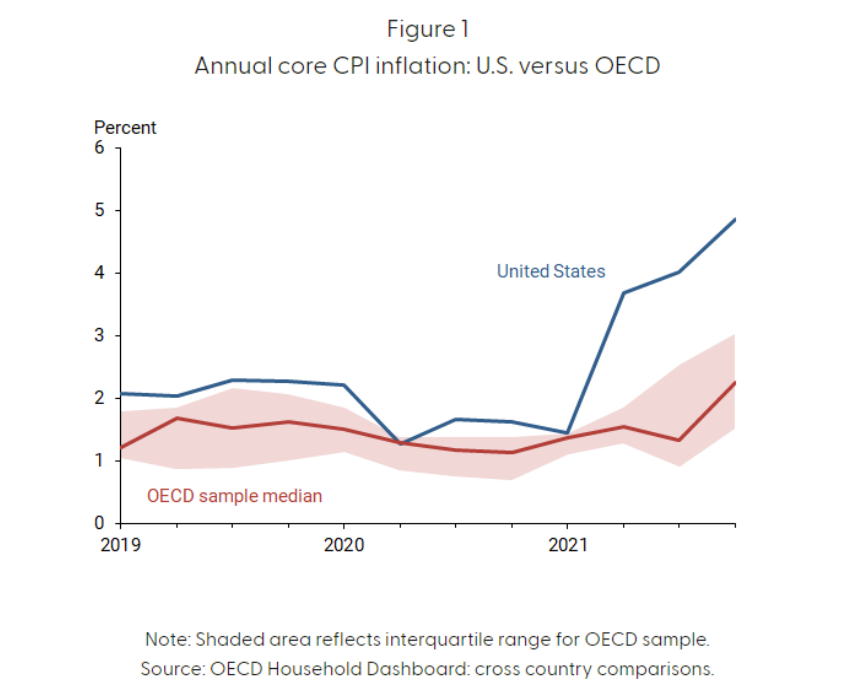
Comparing US inflation to the rest of the world (as represented by the Organization for Economic Co-operation and Development (“OECD”)), it’s clear that US inflation is much higher. While the war in Ukraine has been blamed for much of the price increase (oil, agriculture etc.), the chart below shows that US inflation actually took off at the beginning of 2021 well before the invasion of Ukraine. Even looking at periods prior to the breakout of inflation, the US has tended to run their economy hotter than the rest of the world.
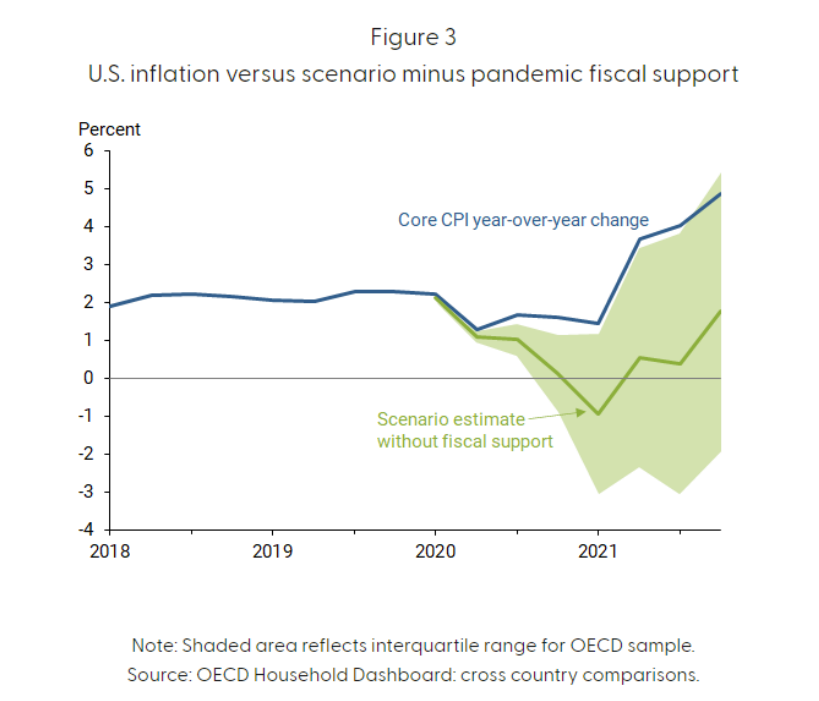
A recent paper from the Federal Reserve Bank of San Francisco revealed that the emergency fiscal policies adopted during COVID were responsible for roughly 3% of the inflation we’re experiencing today. If that fiscal support were not present, US inflation would be much more comparable to the rest of the world (and much lower). Looking at the green line in the chart below, the scenario without fiscal support, you can observe that the US economy could have been on a frightening path (a scenario not seen since the Great Depression), so the US made a bet to aggressively expand fiscal policy to maintain the real economy during COVID. The Fed, Treasury, and other government officials most likely assumed fiscal stimulus would contribute in some form to inflation and were willing to accept the risk given the alternative scenarios (massive deflationary depression).
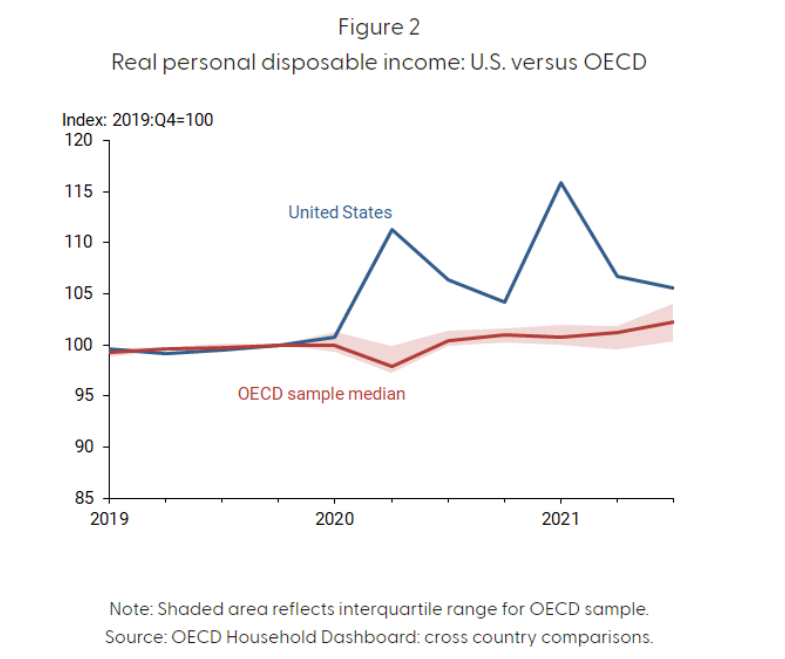
Clearly that bet has not worked out as intended with respect to inflation. Obviously, there’s not much the Fed or Treasury can do about oil supply, and the invasion of Ukraine was not expected, but they knew the risks they were taking when expanding fiscal policy and it should be owned. But now the question moving forward is what happens in response to these inflationary pressures?
The response has been a rapid tightening of monetary conditions with the Fed moving much faster than other Central Banks around the world (i.e., The European Central Bank). In addition to an environment of restrictive monetary policy, fiscal policy has also become much more restrictive. Biden’s “Build Back Better” bill has been halted by progressive like W.V. Senator Joe Manchin who has called for less spending until inflation is reigned in. A restrictive environment like this should see inflation head back to OECD averages, but what is unclear is the timing of this move. Add in the supply chain issues, and the US could experience stubbornly high inflation for an extended period.
Content in this material is for general information only and not intended to provide specific advice or recommendations for any individual. All performance referenced is historical and is no guarantee of future results. The economic forecasts set forth in this material may not develop as predicted and there can be no guarantee that strategies promoted will be successful.
